

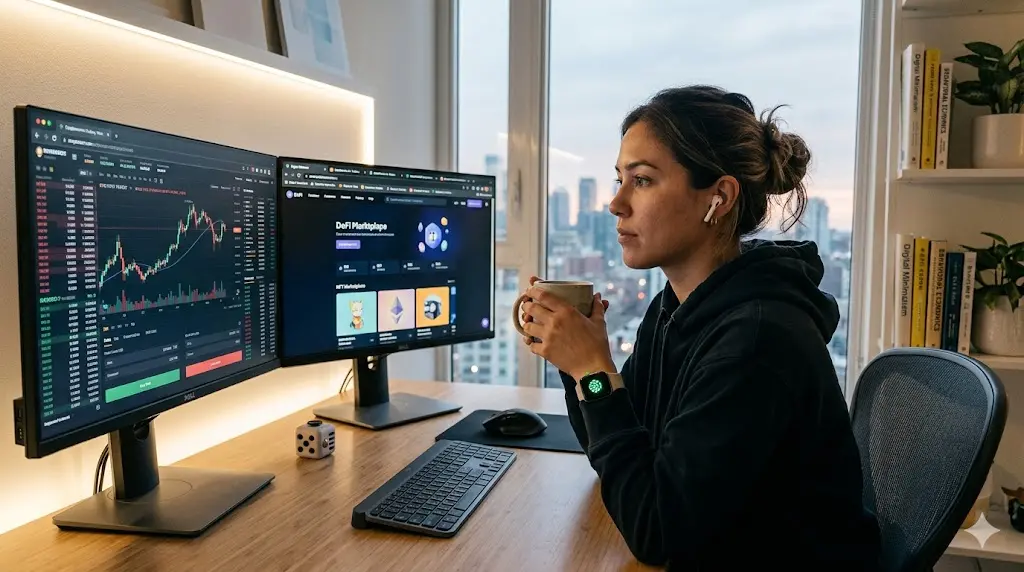
Mental health is quietly shaping how people interact with digital assets, especially in fast-moving crypto and token markets. When emotions swing, investment decisions swing too, and that ripple effect is changing market behavior in ways most analysts still underestimate. Why mental health is influencing the future of digital assets comes down to one simple truth: people don’t trade like machines, they trade like humans under pressure.
I’ve seen this pattern repeat over and over—stress, excitement, fear, and even burnout directly affecting buying and selling behavior. If you ignore the psychological side, you’re only seeing half the market.
Mental health influences digital assets because investor emotions directly impact trading decisions, volatility patterns, and long-term holding behavior. Anxiety, fear of missing out, and burnout often lead to impulsive trades or panic selling. As digital markets grow, psychological stability is becoming just as important as financial strategy for sustainable participation.
What Is Mental Health’s Role in Digital Assets?
Mental health and digital asset behavior refers to how emotional and psychological states affect decisions in cryptocurrency, NFTs, and other blockchain-based investments.
Simply put:
Mental health in trading = the emotional condition that shapes how rational or irrational financial decisions become.
Digital assets amplify this effect because markets run 24/7. There’s no closing bell, no pause, no natural break. That constant exposure can mess with sleep cycles, attention spans, and emotional balance.
What most people overlook is that volatility isn’t just caused by news or liquidity—it’s also driven by collective emotional reactions happening in real time.
Why Mental Health Matters in Digital Assets in 2026
In 2026, digital asset participation isn’t limited to professionals anymore. Everyday users, students, freelancers, and even first-time investors are involved. That shift has made psychological stability a core part of market behavior.
Here’s the thing: more participation doesn’t always mean more maturity.
Retail investors often react emotionally to price swings. A sudden drop can trigger panic selling, while a sudden spike can trigger impulsive buying. This emotional loop creates exaggerated market cycles.
From what I’ve observed, the biggest change is not technological—it’s behavioral. People are now constantly connected to their portfolios through mobile apps, which increases emotional attachment. That attachment leads to over-monitoring, and over-monitoring leads to stress.
An expert observation worth noting: markets are becoming less about information advantage and more about emotional endurance.
How to Manage Emotional Trading in Digital Assets — Step by Step
Managing mental health in digital asset investing isn’t about removing emotion completely. That’s unrealistic. It’s about controlling how emotion influences action.
Step 1: Set a decision boundary before market exposure
Decide your entry, exit, and loss tolerance before you look at charts. Once emotions kick in, logic weakens.
Step 2: Limit constant portfolio checking
Checking prices every few minutes sounds harmless, but it slowly increases anxiety and reactive behavior.
Step 3: Separate identity from investment performance
Your portfolio is not your self-worth. This distinction sounds obvious, but it’s often blurred during losses or gains.
Step 4: Build cooldown habits after major market movements
After a big gain or loss, avoid immediate action. Let emotional intensity settle before deciding.
Step 5: Track emotional patterns, not just financial ones
Journaling your emotional state during trades can reveal hidden triggers like fear, boredom, or impatience.
Emotional Overconfidence (Common Misconception)
One counterintuitive issue is that mental strength can sometimes become overconfidence.
People who feel “emotionally in control” often take bigger risks, thinking they’re immune to panic. But markets have a way of breaking that illusion quickly. Emotional discipline doesn’t mean emotional suppression—it means awareness.
Expert Tips: What Actually Works in Real Market Behavior
Here’s what most guides miss: emotional control isn’t built during calm periods—it’s built during stressful ones.
In my experience, the most successful digital asset participants aren’t the ones who avoid emotions, but the ones who recognize emotional shifts early. That small awareness gap is everything.
Another thing I’ve noticed is that community influence plays a huge role. If you’re constantly exposed to hype-driven discussions, your decision-making slowly adapts to that tone without you realizing it.
Expert tip: reduce emotional contamination by controlling what you consume during volatile market phases. Even a few hours of distance from high-intensity discussions can reset judgment clarity.
Also, burnout is real. People assume trading fatigue is just “screen time,” but it’s actually decision fatigue layered with emotional tension. That combination can quietly distort rational thinking.
Why Mental Health Is Becoming a Market Indicator
Traditionally, markets were analyzed using price, volume, and technical indicators. But there’s an emerging layer that’s harder to quantify: emotional sentiment at scale.
Digital asset markets react not only to news but also to collective emotional states like fear spikes, excitement waves, and uncertainty clusters.
Let me be direct—at least from what I’ve seen, emotional pressure sometimes moves faster than actual information. That’s why panic selling can happen even without strong fundamental reasons.
This is where mental health becomes indirectly measurable through market behavior patterns like sudden volatility clusters or liquidity gaps caused by emotional exits.
Real-World Example: The Overexposed Trader
A friend of mine (let’s call him “R”) started trading crypto during a bullish phase. At first, everything looked easy. Small wins built confidence quickly.
Then the market dipped sharply.
He didn’t just lose money—he lost sleep, stopped focusing on work, and kept checking prices throughout the night. His decisions shifted from strategy-based to reaction-based. He sold at a loss, then bought back higher out of regret.
What’s interesting is not the loss itself, but how his emotional cycle dictated the entire outcome. That pattern is far more common than most people admit.
Another Perspective: Mental Health as a Competitive Advantage
Here’s an unpopular take: emotional awareness might become a competitive advantage in digital asset markets.
Why? Because most participants still underestimate psychology. If you can stay stable while others react impulsively, you gain an indirect edge.
It’s not about predicting markets perfectly—it’s about avoiding self-inflicted mistakes during emotional peaks.
People Most Asked About Mental Health and Digital Assets
Why does mental health affect crypto trading so much?
Because crypto markets are highly volatile and constantly active. Emotional reactions like fear and excitement directly influence buying and selling decisions, often more than technical analysis.
Can stress impact investment performance?
Yes. Stress reduces decision quality, increases impulsive behavior, and makes investors more likely to exit positions too early or enter trades without proper analysis.
Is emotional trading always bad?
Not always. Emotions can provide intuition, but without control, they tend to distort judgment. Balanced awareness is more effective than emotional suppression.
How can beginners avoid emotional trading mistakes?
Start with small positions, define clear rules before trading, and avoid constant price monitoring. Building structure early helps reduce emotional interference.
Does mental health really influence market trends?
Indirectly, yes. Collective investor psychology contributes to volatility patterns, especially during uncertainty or major price movements.
Expert Tip (Final Insight)
If you want one practical shift, focus less on predicting the market and more on predicting your reaction to the market. That single mindset change reduces most emotional trading mistakes before they happen.
Promotional Paragraph
If you need stronger visibility for your brand in competitive digital spaces, our Network site provides related offerings including Guest Posting Services and Press Release News Submission, SEO and local business listing solutions in the UK market. These services are designed to improve brand visibility, build high authority backlinks, and support organic traffic growth through strategic content placement. You can explore more via Press Release News Submission and build high authority backlinks for scalable SEO ranking and media coverage opportunities tailored for businesses, startups, and agencies seeking consistent online exposure.