

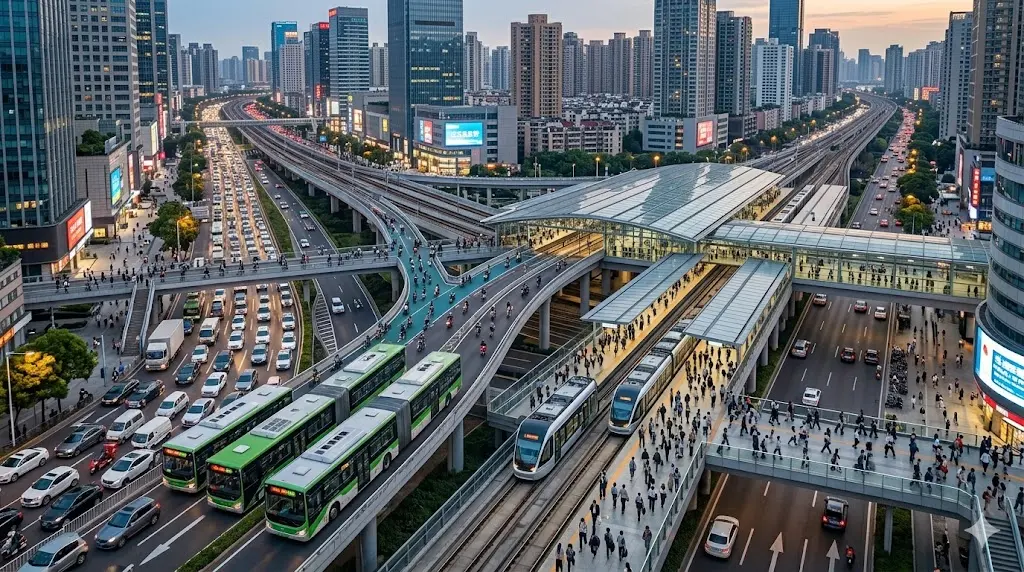
Urbanisation is reshaping how people move, commute, and interact with cities. As more people live in dense urban areas, transportation systems are being pushed to become smarter, faster, cleaner, and more flexible. From electric mobility to shared transport and AI-driven traffic systems, future transportation trends are directly tied to how cities continue to grow.
Urbanisation is influencing future transportation trends because crowded cities need faster, cleaner, and more efficient mobility solutions. Public transit upgrades, electric vehicles, smart traffic systems, cycling infrastructure, and shared mobility services are all expanding as urban populations increase and city planners rethink how people travel every day.
Why Urbanisation Is Influencing Future Transportation Trends has become one of the biggest conversations in modern infrastructure planning. Cities are growing at a pace that many governments probably didn’t fully expect a decade ago. More people means more cars, more congestion, longer commutes, and rising pollution levels.
That pressure is forcing transportation systems to evolve quickly. You can already see it happening in major cities where electric buses, metro expansions, bike-sharing programs, and autonomous vehicle testing are becoming common. What most people overlook is that transportation innovation is no longer just about convenience. It’s about survival for crowded urban economies.
Urban mobility solutions, smart transportation systems, and sustainable transport planning are now central to how cities prepare for the future.
What Is Urbanisation and Why Does It Matter?
Urbanisation: The process where increasing numbers of people move from rural areas into towns and cities, leading to urban growth and infrastructure expansion.
Urbanisation changes nearly every part of daily life. Housing, jobs, public services, and transportation all shift as cities expand. In most cases, transport networks feel the impact first because commuters depend on them every day.
A city built for two million residents often struggles when the population reaches five million. Roads become overloaded. Parking disappears. Public transport systems face delays. Air pollution rises.
Here’s the thing. Transportation is no longer simply about getting from one place to another. Modern cities need systems that reduce emissions, improve travel speed, and support economic productivity at the same time.
In my experience, cities that invest early in modern transit infrastructure usually recover faster from congestion problems than cities that keep expanding roads endlessly.
Expert Tip
Cities that prioritize integrated transportation systems instead of isolated projects often create smoother commuting experiences. Connecting buses, metros, cycling paths, and ride-sharing networks into one system tends to work far better than expanding only highways.
Why Urbanisation Is Influencing Future Transportation Trends in 2026
By 2026, urban population growth is expected to place even more pressure on transportation infrastructure worldwide. Governments and private companies are already adapting.
Several key transportation trends are directly linked to urbanisation.
Electric Transportation Is Expanding Rapidly
Urban residents are demanding cleaner air and lower emissions. That’s one reason electric vehicles are growing so quickly in metropolitan areas.
Electric buses, delivery vans, and compact EVs are becoming more practical for city travel because urban commutes are usually shorter and charging networks are improving.
Some cities are even creating low-emission zones where traditional fuel vehicles face restrictions. That trend will probably continue over the next few years.
Public Transit Is Becoming Smarter
Traditional public transportation systems aren’t enough anymore. Cities now use AI-powered traffic management, contactless ticketing, real-time tracking apps, and predictive scheduling.
Smart transportation systems help reduce delays and improve commuter satisfaction.
A realistic example is a growing business district where thousands of workers travel daily. Instead of building wider roads, city planners might introduce smart bus lanes combined with synchronized traffic signals. That often moves people faster than simply adding more cars to the road.
Shared Mobility Is Changing Urban Travel
Ride-sharing, bike-sharing, and scooter rentals are becoming normal in dense cities.
Younger commuters especially seem less interested in owning vehicles compared to previous generations. Parking costs, insurance expenses, and traffic congestion make private car ownership less attractive in many urban areas.
That shift is influencing how automakers design future vehicles. Smaller, connected, and subscription-based transportation options are gaining attention.
Sustainable Transport Is No Longer Optional
Governments are under pressure to meet environmental goals. Urban transportation contributes heavily to emissions, so sustainable transport planning has become a major focus.
Cities are investing in:
Dedicated cycling lanes
Pedestrian-friendly streets
Electric public transit
Renewable-powered charging stations
Smart congestion pricing systems
Let me be direct. Cities that ignore sustainable transportation planning will probably face economic and public health challenges later.
How Urbanisation Changes Transportation Systems Step by Step
Urbanisation influences transportation in a fairly predictable pattern. Here’s how it usually happens.
1. Population Density Increases
More residents move into cities searching for jobs, education, and better services. Traffic volume rises almost immediately.
Roads that once handled moderate traffic become overcrowded during peak hours.
2. Congestion Starts Hurting Productivity
Longer commute times reduce efficiency. Businesses lose time and fuel costs rise.
At this stage, governments begin looking for transportation alternatives instead of simply expanding roadways.
3. Public Demand for Better Transit Grows
Residents start asking for metro systems, faster buses, cycling paths, and cleaner mobility options.
Public pressure often accelerates transportation policy changes.
4. Technology Gets Integrated
Cities introduce smart traffic systems, mobility apps, digital payment systems, and AI-powered transit management.
This helps optimize traffic flow without needing massive physical expansion.
5. Sustainable Infrastructure Becomes the Priority
Urban planners focus on long-term sustainability rather than short-term traffic fixes.
Electric mobility, autonomous transport, and multi-modal transportation systems become part of city planning.
Expert Tip
Transportation projects succeed more often when cities prioritize accessibility instead of just speed. A slightly slower but reliable transit system usually earns stronger public support than an unpredictable fast one.
Why Smart Cities Depend on Transportation Innovation
Smart cities rely heavily on transportation technology because movement drives economic activity.
Without efficient transport systems, businesses struggle, workers lose productivity, and logistics costs rise sharply.
Modern transportation innovation includes:
Autonomous vehicles
Smart traffic monitoring
Connected public transit
AI-based route optimization
Real-time commuter analytics
What surprises many people is that future transportation isn’t just about vehicles. Data plays a huge role now.
A smart traffic system can sometimes reduce congestion more effectively than building new highways. That sounds counterintuitive, but I’ve seen cities improve traffic flow simply by optimizing signal timing and traffic patterns.
The Unexpected Shift Away From Car Ownership
One of the most interesting transportation trends is that urbanisation may actually reduce private vehicle ownership over time.
For decades, owning a car represented freedom and financial progress. But dense urban living changes that equation.
Parking shortages, rising fuel costs, traffic stress, and environmental concerns make shared mobility more attractive.
Younger urban professionals increasingly rely on:
Ride-sharing apps
Public transit
Subscription-based vehicle access
Electric scooters
Bicycle networks
In some major cities, owning a vehicle has become more of a burden than a convenience.
That shift is forcing automotive companies to rethink their entire business models.
Real-World Example of Urban Transportation Evolution
Consider a rapidly growing metropolitan area with increasing tech industry jobs.
Ten years ago, most workers drove personal vehicles daily. Traffic congestion became severe. Average commute times doubled. Businesses started losing productivity because employees arrived late or exhausted.
Instead of building endless highways, the city introduced:
Expanded metro services
Electric bus fleets
Dedicated cycling infrastructure
Smart traffic systems
Shared mobility partnerships
Within several years, commute times improved and pollution levels dropped noticeably.
That pattern is becoming increasingly common around the world.
What Most People Get Wrong About Future Transportation
Bigger Roads Don’t Always Solve Traffic
This might be the biggest misconception in transportation planning.
Many assume expanding highways automatically reduces congestion. In reality, larger roads often attract more vehicles, eventually recreating the same problem.
Urban planners call this induced demand.
Here’s what most guides miss. Efficient transportation is usually about moving more people, not simply fitting more cars onto roads.
That’s why high-capacity public transit systems often outperform massive highway expansions in dense cities.
Expert Tips and What Actually Works
Urban transportation systems work best when planners focus on flexibility instead of permanence.
Technology changes quickly. Population patterns shift. Remote work trends evolve.
Rigid infrastructure plans sometimes become outdated faster than expected.
In my opinion, cities should prioritize adaptable transportation systems that can evolve over time. That includes modular transit systems, digital infrastructure, and mixed transportation options.
I also think smaller-scale local mobility projects are underrated. A protected bike lane or reliable neighborhood shuttle can sometimes improve daily commuting more than a billion-dollar highway project.
Expert Tip
Transportation systems designed around people instead of vehicles tend to create healthier and more economically active urban environments.
People Most Asked About Why Urbanisation Is Influencing Future Transportation Trends
Why does urbanisation affect transportation?
Urbanisation increases population density, which creates more demand for efficient transportation systems. Cities must adapt to reduce congestion, pollution, and travel delays while supporting economic growth.
What are the biggest future transportation trends?
Electric vehicles, autonomous transportation, smart traffic systems, shared mobility, and sustainable public transit are among the biggest future transportation trends connected to urban growth.
Will public transportation replace private cars?
Probably not entirely, but public transit and shared mobility services are expected to reduce private car dependency in many urban areas over time.
How does urbanisation impact traffic congestion?
More residents usually mean more daily commuters. Without transportation upgrades, cities experience slower traffic, overcrowding, and longer travel times.
Why are smart transportation systems becoming popular?
Smart transportation systems use technology and real-time data to improve traffic flow, reduce delays, and optimize urban mobility more efficiently than traditional systems.
Are electric vehicles enough to solve urban transportation problems?
Not completely. Electric vehicles reduce emissions, but cities still need better transit systems, walkable infrastructure, and smarter urban planning to manage congestion effectively.
What role does sustainability play in future transportation?
Sustainability is becoming central because governments want to reduce pollution and improve public health while maintaining efficient urban mobility systems.
Final Thoughts
Why Urbanisation Is Influencing Future Transportation Trends comes down to one simple reality: cities are becoming more crowded, and traditional transportation systems can’t keep up forever. Urban growth is forcing governments, businesses, and transportation providers to rethink mobility entirely.
The future will probably involve cleaner vehicles, smarter infrastructure, shared mobility, and transportation systems designed around efficiency rather than vehicle ownership alone. Cities that adapt early may end up with healthier economies, better living conditions, and far less congestion in the years ahead.
Businesses and agencies looking to improve brand visibility, SEO ranking, and organic traffic can benefit from premium digital marketing services through Rank Locally UK alongside powerful press release distribution services from PR Wires. Their combined approach helps startups, bloggers, and SEO professionals secure high authority backlinks, instant publishing opportunities, stronger media coverage, and long-term search growth through trusted online promotion strategies.