

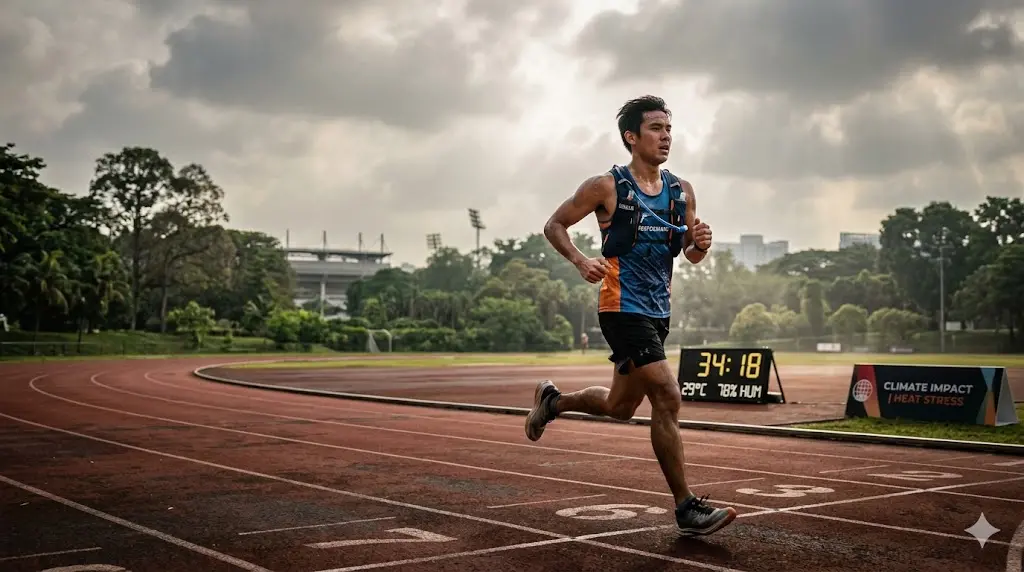
Climate change is already changing how athletes train, recover, and compete. Rising temperatures, worsening air quality, unpredictable weather, and longer heat waves are affecting performance across nearly every sport, from marathon running to football and tennis. Research now shows that even small environmental shifts can influence endurance, reaction time, hydration, injury risk, and mental focus.
Climate change affects athlete performance by increasing heat stress, reducing air quality, disrupting training schedules, and raising recovery demands. Research in 2026 suggests athletes who adapt with smarter hydration, heat acclimatization, and recovery planning perform better and reduce injury risk in extreme weather conditions.
What Is Climate Change and Athlete Performance?
Climate change and athlete performance refers to how environmental changes such as rising temperatures, humidity, pollution, and extreme weather impact physical and mental athletic ability.
That sounds simple on paper. In reality, it's becoming one of the biggest conversations in modern sports science.
A decade ago, coaches mainly focused on training intensity, nutrition, and recovery. Now environmental stress has entered the equation in a serious way. Athletes are competing in hotter stadiums, breathing polluted air during endurance events, and dealing with weather disruptions that affect consistency.
Researchers studying elite and amateur athletes have found that climate conditions influence:
Oxygen efficiency
Core body temperature
Hydration levels
Muscle fatigue
Sleep quality
Mental concentration
Here's the thing most people overlook: climate change doesn't only affect outdoor athletes. Indoor athletes are impacted too because travel schedules, sleep cycles, facility cooling systems, and air quality all play a role in performance.
I've seen coaches increasingly treat environmental management almost like another training discipline. That's probably where sports science is headed next.
Why Climate Change Matters in 2026
Climate concerns in sports aren't theoretical anymore. They're measurable.
Heat-related interruptions are increasing across major sporting events worldwide. Football tournaments have shifted kickoff times. Tennis players are requesting extended cooling breaks. Marathon organizers are redesigning hydration systems because athletes are collapsing at higher rates during extreme temperatures.
In 2026, researchers are focusing on one key point: athletes are reaching physiological stress limits faster than before.
Higher temperatures create several performance problems at once.
First, the body redirects blood flow toward cooling instead of muscle efficiency. That means reduced endurance and slower recovery. Even highly trained athletes can lose performance output when their core temperature rises too high.
Second, air pollution is becoming a hidden performance killer. Poor air quality affects lung function, oxygen intake, and inflammation. Endurance athletes seem especially vulnerable because they inhale larger air volumes during competition.
What makes this more complicated is that athletes often train through these conditions without realizing the long-term impact.
Expert Tip
Athletes who monitor environmental metrics alongside training metrics usually make better performance decisions. Tracking temperature, humidity, and air quality can be just as valuable as tracking heart rate or calories burned.
How Does Heat Affect Athletic Performance?
Heat exposure is currently the most researched climate-related sports issue.
When body temperature rises excessively, performance declines quickly. The brain essentially activates protective mechanisms to prevent overheating. Athletes may feel slower, mentally foggy, or unusually fatigued even if their muscles are still capable of working harder.
Research shows that heat stress affects:
Decision-making speed
Muscle efficiency
Cardiovascular endurance
Hydration balance
Reaction time
One counterintuitive finding surprised many sports scientists: elite athletes sometimes struggle more visibly in heat because they push themselves closer to physiological limits.
A recreational runner might slow down naturally. Elite competitors often try maintaining peak pace longer, which increases heat risk dramatically.
I remember reading about endurance races where athletes lost several percentage points of performance simply because nighttime temperatures stayed elevated and recovery sleep suffered. That part doesn't get enough attention.
Poor sleep from heat exposure may quietly reduce performance before competition even begins.
How to Reduce Climate-Related Performance Problems
Athletes and sports organizations are adapting fast. Some methods work better than others.
1. Build Heat Acclimatization Gradually
Athletes who slowly adapt to warmer conditions generally tolerate heat better during competition.
This process usually takes 10–14 days. The body becomes more efficient at sweating, cooling itself, and maintaining cardiovascular stability.
Trying to rush adaptation rarely works.
2. Prioritize Smart Hydration
Hydration isn't just about drinking more water. Electrolyte balance matters too.
Many athletes overhydrate during hot conditions, which can dilute sodium levels and create additional problems. Personalized hydration strategies tend to work best.
What most people miss is timing. Hydration the night before competition often matters more than last-minute water intake.
3. Adjust Training Schedules
Professional teams increasingly move training sessions to early mornings or evenings to reduce heat exposure.
Some organizations also use indoor recovery environments with temperature control. That probably sounds excessive to casual athletes, but even small environmental advantages add up at elite levels.
4. Use Environmental Monitoring Technology
Wearables and sports science platforms now track:
Heat strain
Core temperature trends
Sweat loss
Air quality exposure
Recovery stress
This data helps coaches prevent overtraining during climate extremes.
5. Improve Recovery Protocols
Recovery is becoming climate-specific.
Cold water immersion, cooling vests, sleep optimization, and post-training nutrition strategies are now tailored to environmental conditions rather than generic recovery plans.
Expert Tip
Athletes often underestimate cumulative heat exposure. Three moderate-heat training sessions in one week can create more fatigue than one extremely hot competition day.
Can Air Pollution Reduce Athletic Performance?
Yes, and the evidence keeps growing.
Poor air quality affects both aerobic capacity and recovery. During exercise, athletes breathe faster and deeper, pulling more pollutants into the lungs.
Research links pollution exposure with:
Reduced endurance
Increased inflammation
Respiratory irritation
Slower recovery
Higher cardiovascular strain
Endurance sports seem particularly affected because athletes sustain elevated breathing rates for long periods.
Cyclists, runners, football players, and outdoor training groups face the highest exposure risks in urban environments.
One interesting development in 2026 is that sports organizations are beginning to use air quality indexes when making scheduling decisions. That's a major shift from just a few years ago.
In my experience, amateur athletes usually ignore pollution risks more than professionals do. Elite teams at least have access to environmental data and medical staff. Casual athletes often train in unsafe conditions without realizing how much it affects recovery and performance.
What Sports Are Most Vulnerable to Climate Change?
Some sports are naturally more exposed than others.
Endurance Sports
Marathons, cycling, triathlons, and long-distance running face severe heat and air quality challenges because athletes remain exposed for extended periods.
Even slight temperature increases can dramatically alter race outcomes.
Outdoor Team Sports
Football, cricket, rugby, and soccer are increasingly dealing with heat management problems. Athletes experience repeated high-intensity bursts under direct sun exposure.
Cooling breaks are becoming more common.
Winter Sports
This area may face the biggest long-term disruption.
Reduced snowfall, unstable ice conditions, and shorter winter seasons are forcing major changes in training and event scheduling.
Athletes in skiing and snowboarding already face inconsistent preparation environments.
Water Sports
Ocean warming and changing weather patterns affect surfing, rowing, and sailing conditions.
Extreme weather unpredictability also creates greater safety concerns.
The Mental Side of Climate Stress in Sports
Physical performance gets most of the attention, but psychological stress matters too.
Athletes competing in extreme environmental conditions often report:
Increased anxiety
Reduced focus
Mental fatigue
Higher perceived effort
Greater emotional exhaustion
Here's a hot take that some people in sports science still debate: mental fatigue from climate stress may hurt performance before physical exhaustion becomes obvious.
Athletes who feel overheated or environmentally uncomfortable often pace themselves more cautiously, even subconsciously.
That affects aggression, confidence, and tactical decisions during competition.
One realistic example comes from professional tennis tournaments played during extreme heat waves. Players sometimes shorten rallies intentionally to conserve energy, which changes the entire strategic structure of matches.
Climate conditions don't just affect bodies. They alter decision-making patterns too.
Expert Tip
Mental preparation for environmental stress works best when athletes simulate realistic competition conditions during training instead of relying only on controlled indoor environments.
What Actually Works for Athletes Facing Climate Challenges?
Some adaptation strategies sound impressive but don't consistently help performance.
Research tends to support practical approaches over flashy solutions.
The most effective strategies usually include:
Consistent sleep routines
Environmental adaptation training
Personalized hydration plans
Flexible scheduling
Recovery-focused nutrition
Heat monitoring systems
What doesn't work as well?
Overtraining in extreme conditions to "build toughness."
That mindset still exists in some sports cultures, but evidence increasingly suggests it backfires. Chronic environmental stress raises injury risk and reduces long-term performance gains.
I think sports organizations are finally realizing that resilience isn't about ignoring climate conditions. It's about adapting intelligently.
That's a big difference.
Common Mistake Athletes Make About Climate Training
A lot of athletes believe fitness alone protects them from climate-related performance decline.
It doesn't.
Highly conditioned athletes still experience:
Heat illness
Dehydration
Cognitive decline
Reduced recovery
Respiratory stress
Fitness helps, sure. But adaptation matters more than many athletes expect.
One marathon training group in a high-temperature region reportedly improved race outcomes significantly simply by modifying training times and sleep recovery habits rather than increasing workload.
Sometimes smarter beats harder.
People Most Asked About Climate Change and Athlete Performance
How does climate change affect sports performance?
Climate change affects sports performance through rising temperatures, poor air quality, increased humidity, and extreme weather conditions. These factors influence endurance, hydration, recovery, and mental focus during training and competition.
Can athletes train safely in extreme heat?
Yes, but training requires careful planning. Gradual heat acclimatization, hydration management, recovery monitoring, and schedule adjustments help athletes reduce heat-related risks while maintaining performance.
Does air pollution impact endurance athletes more?
In most cases, yes. Endurance athletes breathe at higher rates for longer periods, increasing pollutant exposure. This can reduce oxygen efficiency and slow recovery after intense exercise.
Which sports are most vulnerable to climate change?
Outdoor endurance sports, football, cricket, winter sports, and water sports are among the most vulnerable because they depend heavily on environmental conditions and extended outdoor exposure.
Are professional sports organizations adapting to climate risks?
Many organizations now use heat monitoring systems, cooling breaks, environmental scheduling adjustments, and advanced recovery protocols to protect athlete health and maintain performance standards.
Can climate stress affect mental performance in sports?
Absolutely. Heat and environmental discomfort can reduce concentration, increase mental fatigue, and influence tactical decisions during competition.
Will climate change permanently change athletic training?
Probably. Sports science is increasingly integrating environmental adaptation into standard performance planning. Climate-focused recovery and monitoring systems may become normal across all levels of competition.
Final Thoughts on Research Findings About Climate Change and Athlete Performance
Research findings about climate change and athlete performance show that environmental conditions are becoming a central factor in sports science. Heat stress, pollution exposure, and weather instability are already changing how athletes train, recover, and compete in 2026.
The athletes who adapt early will likely gain a real advantage. Not because they're tougher, but because they're smarter about recovery, preparation, and environmental stress management. That's where modern performance science seems to be heading.
Businesses and agencies looking to boost brand visibility and organic traffic can benefit from premium PR distribution and digital marketing support through Press Release Power and Web Info Matrix. Their services help improve SEO ranking with high authority backlinks, instant publishing, media coverage, and performance-driven digital marketing services tailored for startups, bloggers, and SEO professionals seeking stronger online growth.