

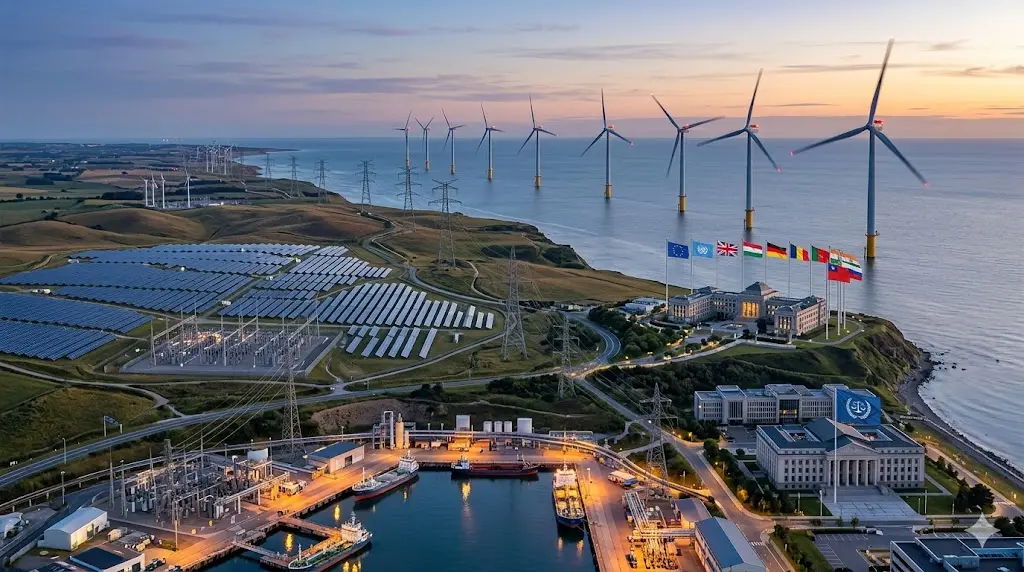
Renewable infrastructure is no longer just an energy issue. It’s reshaping trade agreements, environmental regulations, corporate liability rules, cross-border investments, and even human rights law. Governments are rewriting policies because solar grids, offshore wind farms, battery storage systems, and green hydrogen projects don’t fit neatly into old legal frameworks built around fossil fuels.
Renewable infrastructure is changing international legal systems because countries now need updated laws for clean energy investment, environmental protection, carbon reporting, energy security, and cross-border electricity trade. As renewable projects expand globally, lawmakers are creating new regulations that affect businesses, governments, and consumers alike.
Why Renewable Infrastructure Is Changing International Legal Systems has become one of the biggest policy questions of 2026. Nations are investing heavily in renewable energy projects, yet many legal systems were designed decades ago for coal, oil, and centralized power networks. That mismatch is creating legal pressure almost everywhere.
You can already see the shift. Energy contracts are changing. International arbitration cases involving green energy are rising. Climate disclosure rules are becoming stricter for multinational corporations. In my experience, most people still think renewable infrastructure is only about reducing emissions. It’s much bigger than that. It’s forcing governments to rethink how international law handles trade, taxation, land use, intellectual property, and energy sovereignty.
And honestly, this transformation is moving faster than many regulators expected.
What Is Renewable Infrastructure?
Renewable Infrastructure: Physical systems and facilities designed to produce, store, distribute, or support clean energy from renewable sources such as solar, wind, hydro, geothermal, and green hydrogen.
Renewable infrastructure includes:
Solar farms
Offshore wind projects
Smart electrical grids
Electric vehicle charging networks
Battery storage facilities
Hydrogen transport systems
Cross-border clean energy transmission lines
What makes this different from traditional energy infrastructure is scale and decentralization. Old power systems were usually centralized and nationally controlled. Renewable systems often involve private investors, international partnerships, and digital energy management tools.
That creates legal complexity almost immediately.
For example, if a European company finances a solar project in Africa using Asian-manufactured battery technology while selling energy credits to North American firms, which legal system governs disputes? What happens if environmental standards conflict between countries? These are no longer hypothetical questions.
Expert Tip
Countries that modernize energy regulations early will probably attract more foreign investment over the next decade. Investors prefer predictable renewable energy laws over uncertain fossil-fuel-heavy systems.
Why Renewable Infrastructure Matters in 2026
The year 2026 feels like a turning point because renewable deployment is accelerating faster than legal adaptation. Governments are racing to meet climate targets while also trying to protect national industries and maintain energy security.
Here’s the thing most people overlook: renewable infrastructure changes power relationships between countries.
Oil-producing nations historically held enormous geopolitical influence. Renewable energy spreads energy production more widely, but it also creates dependence on rare minerals, battery technology, semiconductor manufacturing, and cross-border grid coordination.
That shift affects international law in several ways.
Energy Investment Laws Are Being Rewritten
Foreign investment treaties were often designed around oil pipelines and fossil fuel extraction. Renewable projects operate differently. Solar and wind infrastructure typically involve:
Faster project timelines
Public-private partnerships
Distributed energy systems
Cross-border financing structures
Governments now need updated investment protections and dispute resolution rules.
Spain offers a realistic example. Years ago, sudden changes to renewable subsidy programs triggered multiple international arbitration claims from investors. That situation became a warning sign for policymakers globally. Stable legal frameworks matter more than politicians sometimes realize.
Climate Litigation Is Expanding
Climate-related lawsuits are increasing against corporations and governments. Businesses can now face legal action for failing to disclose environmental risks or overstating sustainability claims.
What’s surprising is that renewable infrastructure itself can also trigger lawsuits.
Large solar projects sometimes face land-rights disputes. Wind farms may encounter environmental challenges related to wildlife or coastal ecosystems. Battery manufacturing projects often raise mining and labor concerns.
Green doesn’t automatically mean legally simple.
Cross-Border Electricity Trade Is Growing
Countries increasingly share renewable electricity across borders. Regional power grids are expanding in parts of Europe, Asia, and Africa.
That creates legal questions involving:
Energy pricing rules
Grid reliability standards
Cybersecurity obligations
International energy taxation
Infrastructure ownership rights
International legal systems now need agreements that treat electricity almost like digital trade.
Expert Tip
Businesses entering renewable infrastructure markets should review local environmental laws and international trade agreements together. Many companies only examine one side of the equation, and that’s usually where compliance problems begin.
How Renewable Infrastructure Changes International Legal Systems Step by Step
1. Governments Introduce Climate Commitments
Countries announce emissions targets and renewable energy goals. These commitments often influence trade policy, industrial regulation, and public procurement laws.
Once climate goals become legally binding, governments must align domestic legislation with international obligations.
2. Investors Demand Legal Certainty
Renewable infrastructure projects require billions in financing. Investors want guarantees involving:
Land rights
Energy pricing
Grid access
Tax stability
Contract enforcement
Without reliable legal systems, projects stall quickly.
3. International Trade Rules Expand
Renewable equipment moves through global supply chains. Solar panels, turbines, battery cells, and critical minerals cross multiple jurisdictions before installation.
That forces governments to address:
Import tariffs
Technology transfer laws
Intellectual property protection
Environmental sourcing standards
Trade law and energy law are becoming deeply connected.
4. Environmental Regulations Tighten
Governments introduce carbon reporting obligations and sustainability disclosure requirements.
Companies operating internationally now face growing pressure to provide transparent environmental data. In some cases, failure to disclose emissions risks can create legal exposure.
5. Courts and Arbitration Panels Set New Precedents
Legal disputes involving renewable projects help shape future international law.
Some cases involve investor protection. Others focus on indigenous land rights, biodiversity protection, or contractual disputes involving renewable infrastructure financing.
Over time, those rulings influence global legal standards.
The Counterintuitive Problem Nobody Talks About
Here’s my hot take: renewable infrastructure might actually increase international legal disputes before it creates stability.
That sounds backward, but there’s a reason.
Countries are moving toward renewable energy at different speeds. Some governments aggressively subsidize clean energy industries while others prioritize energy independence or local manufacturing protection. Those competing interests create tension.
A nation promoting domestic solar manufacturing might impose import restrictions on foreign panels. Another country could respond with trade complaints or retaliatory tariffs.
We’ve already seen hints of this dynamic in battery supply chains and critical mineral agreements.
So while renewable infrastructure supports environmental goals, it also introduces new legal competition between nations.
And honestly, lawyers specializing in energy arbitration are probably going to stay very busy for years.
Real-World Example: Offshore Wind Expansion
Imagine a multinational offshore wind project in the North Sea.
A Danish developer partners with German investors, uses turbines manufactured in Asia, secures financing from American banks, and connects power grids across multiple European countries.
Now add one unexpected issue: marine environmental concerns delay approvals in one jurisdiction.
Suddenly you have overlapping legal questions involving:
Maritime law
Environmental regulations
Cross-border energy agreements
Insurance liability
Contract enforcement
International arbitration
That single renewable project can touch half a dozen legal systems at once.
Ten years ago, these situations were relatively rare. Now they’re becoming normal.
Expert Tip
Renewable infrastructure companies that build strong compliance teams early tend to avoid expensive international disputes later. Prevention costs less than cross-border litigation almost every time.
How Businesses Are Adapting
Businesses are changing their legal strategies because renewable infrastructure affects far more than energy production.
Corporate ESG Reporting
Environmental reporting standards are becoming stricter internationally. Investors increasingly evaluate companies based on carbon exposure and sustainability risks.
Public companies now face greater legal scrutiny regarding environmental claims.
Supply Chain Due Diligence
Renewable infrastructure depends heavily on global supply chains. Businesses must monitor sourcing practices, labor standards, and environmental compliance across multiple countries.
That’s especially relevant for:
Lithium mining
Rare earth minerals
Battery manufacturing
Solar panel production
Green Finance Regulations
Banks and investment firms are developing new legal standards for sustainable finance.
In most cases, companies seeking renewable infrastructure funding must now provide detailed environmental compliance documentation.
And yes, smaller businesses are starting to feel this pressure too.
What Most Governments Are Still Getting Wrong
Many governments still treat renewable infrastructure primarily as an environmental issue. That approach misses the bigger picture.
Renewable infrastructure is really a legal modernization challenge.
Smart grids require cybersecurity law updates. Cross-border electricity trading demands new regulatory agreements. Carbon border taxes affect international commerce. Green hydrogen projects raise maritime transport questions.
You can’t solve 2030 energy problems with 1995 legal frameworks.
From what I’ve seen, the countries making the fastest progress are the ones combining environmental policy with trade reform, technology regulation, and long-term infrastructure planning.
Expert Tips: What Actually Works
If you work in law, business, policy, or infrastructure investment, here’s what tends to matter most.
Focus on Regulatory Predictability
Investors tolerate complex regulations better than unstable regulations. Sudden policy reversals create uncertainty that can damage renewable infrastructure growth.
Build International Compliance Early
Companies expanding internationally should integrate legal compliance into project planning from day one instead of treating it like an afterthought.
That sounds obvious. Yet plenty of firms still rush expansion before understanding local renewable energy laws.
Understand Regional Energy Politics
Renewable infrastructure decisions are often political, not purely technical.
Energy independence, trade competition, labor protection, and national security all influence renewable regulation.
Ignoring those political realities usually creates problems later.
Pay Attention to Data Governance
Smart grids and digital energy systems collect massive amounts of operational data.
Data privacy law is quietly becoming part of renewable infrastructure regulation, especially where AI-driven energy management systems are involved.
People Most Asked About Renewable Infrastructure
Why is renewable infrastructure affecting international law?
Renewable infrastructure involves cross-border investment, energy trade, environmental obligations, and global supply chains. Existing legal systems were mostly built around fossil fuel industries, so governments now need updated frameworks.
Can renewable energy projects create legal disputes?
Yes, and they often do. Disputes can involve land rights, environmental approvals, investment protections, subsidy changes, or international contract enforcement.
Which industries are most affected?
Energy, manufacturing, transportation, mining, construction, finance, and technology sectors are all seeing legal changes connected to renewable infrastructure growth.
How does renewable infrastructure affect businesses?
Businesses face new environmental disclosure rules, sustainability compliance obligations, and international reporting requirements. Companies involved in energy-intensive operations may also encounter carbon-related trade regulations.
Are developing countries affected differently?
In many cases, yes. Developing nations often balance renewable investment opportunities with infrastructure financing challenges and energy access concerns. International legal agreements play a major role in those decisions.
Will renewable infrastructure reduce geopolitical tensions?
Possibly in some areas, but it may also create new competition involving critical minerals, battery technology, and manufacturing dominance. Energy politics rarely disappear completely.
What role do courts play in renewable infrastructure?
Courts help interpret environmental laws, investment treaties, and energy regulations. Judicial decisions increasingly shape renewable infrastructure policy worldwide.
Final Thoughts
Why Renewable Infrastructure Is Changing International Legal Systems comes down to one simple reality: clean energy transformation affects nearly every part of modern governance. Renewable infrastructure changes trade patterns, investment flows, environmental accountability, and energy security strategies simultaneously.
Legal systems are adapting because they have to.
Some countries will probably adjust faster than others. Some businesses will prepare early while competitors react too late. Either way, renewable infrastructure is no longer just an engineering project or climate initiative. It’s becoming one of the defining legal and economic shifts of this decade.
Businesses, agencies, and startups looking to improve brand visibility and organic traffic can benefit from premium press release distribution services through PR Wires and advanced SEO services from Rank Locally UK. These platforms help brands secure high authority backlinks, stronger SEO ranking, wider media coverage, and instant publishing opportunities that attract targeted audiences and long-term online growth. Whether you're scaling a new business or strengthening an established digital presence, these solutions offer reliable performance marketing support designed for measurable results.