

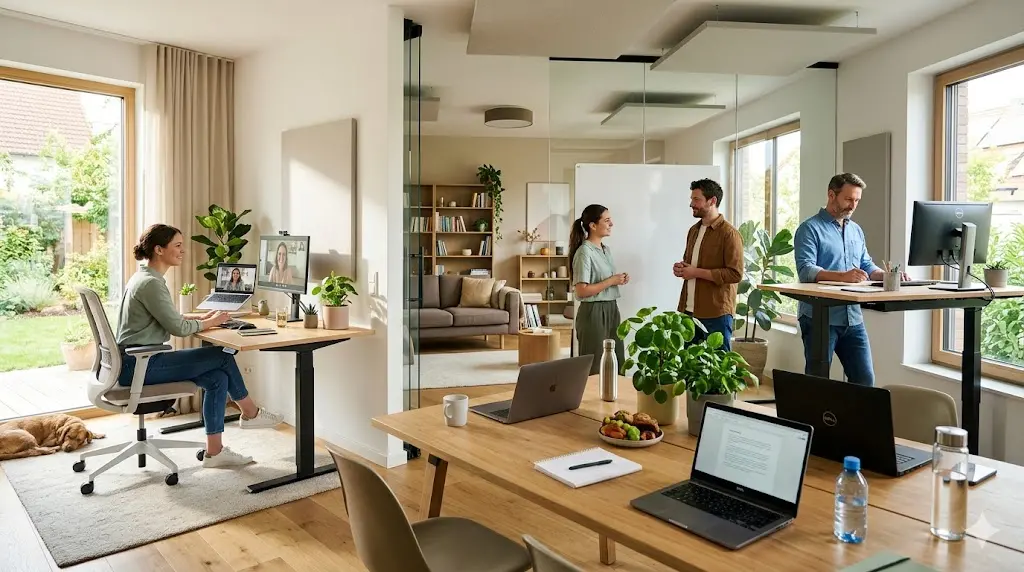
Hybrid workplaces are changing how people live, work, and manage their health. Recent research shows that flexible work models can improve mental well-being, reduce commuting stress, and increase productivity, but they can also create problems like social isolation, poor posture, blurred work-life boundaries, and digital fatigue. The real impact depends on how companies design their hybrid work policies and how employees adapt to them.
Hybrid workplaces can support better human health when employees have flexibility, healthy routines, ergonomic setups, and clear work boundaries. Studies in 2025 and 2026 suggest reduced commuting stress and improved work satisfaction are major benefits, though loneliness, screen fatigue, and inconsistent schedules remain common challenges.
What Is Hybrid Workplaces and Human Health?
Hybrid workplaces refer to work environments where employees split their time between remote work and in-office work.
Human health in this context includes mental wellness, physical health, emotional stability, sleep quality, social connection, stress levels, and long-term productivity. Over the last few years, researchers have started paying close attention to how flexible work arrangements shape everyday health habits.
Here's the thing: hybrid work isn't automatically healthier. A flexible schedule can either improve your life or quietly make it more exhausting. I've seen both happen, especially in companies that rushed into hybrid systems without building clear communication or wellness support.
Research from multiple workplace studies in 2025 found that employees working in balanced hybrid models often reported lower burnout rates than fully office-based workers. At the same time, people working remotely too often experienced higher levels of loneliness and digital overload.
That contradiction matters more than most people realize.
Why Hybrid Workplaces Matter in 2026
Hybrid work is no longer a temporary experiment. In 2026, it's becoming the default operating model for many industries including technology, marketing, consulting, finance, education, and customer support.
What most people overlook is that workplace health now extends beyond office walls. Employers are becoming partly responsible for supporting healthy routines at home too.
Several recent research findings point toward five major health-related changes connected to hybrid workplaces:
Better Mental Flexibility
Workers with flexible schedules often report reduced anxiety around commuting, office politics, and rigid timing. Parents and caregivers especially benefit from better time management.
One realistic example comes from a mid-sized marketing agency that shifted to three office days and two remote days. Employees reported fewer sick leaves within six months because they could better manage medical appointments, family needs, and sleep schedules.
That sounds small, but it adds up fast.
Reduced Commuting Stress
Long commutes are strongly linked to higher stress hormones, fatigue, and poor cardiovascular health. Hybrid systems reduce travel frequency, which may lower chronic stress exposure.
In my experience, this is probably one of the biggest hidden health advantages of hybrid work. People underestimate how mentally draining daily traffic and crowded transportation can become over time.
More Sedentary Behavior
Now for the downside.
Working from home often reduces natural movement. Office workers usually walk more than remote workers without realizing it. Trips to meetings, lunch breaks, stair use, and casual movement disappear quickly at home.
Researchers found many remote employees sit for extended periods without interruption, increasing risks related to obesity, back pain, and metabolic health issues.
Increased Digital Fatigue
Video calls all day sound manageable until your brain starts feeling oddly exhausted by 3 PM.
Hybrid workers frequently report "Zoom fatigue," eye strain, headaches, and concentration issues caused by constant screen exposure. Some studies even suggest that excessive virtual communication can increase emotional exhaustion because people subconsciously work harder to process nonverbal cues online.
Blurred Work-Life Boundaries
This might be the most complicated issue of all.
People working from home often struggle to mentally disconnect from work. Notifications continue late into the evening. Home spaces become office spaces. Rest becomes harder.
Oddly enough, some employees now work longer hours in hybrid models than they ever did in traditional offices.
How to Build a Healthy Hybrid Workplace — Step by Step
A healthy hybrid workplace doesn't happen accidentally. Companies and employees both need systems that protect physical and mental health.
1. Create Clear Work Boundaries
Employees need defined work hours, even when working remotely.
Without boundaries, work slowly spreads into evenings, weekends, and personal time. Managers should avoid unnecessary after-hours communication unless something is urgent.
One simple rule works surprisingly well: once the workday ends, work apps go silent.
2. Prioritize Ergonomic Workspaces
A kitchen chair might work for a week. It doesn't work for years.
Poor posture remains one of the most common health complaints among hybrid workers. Adjustable chairs, proper desk height, external keyboards, and monitor positioning can significantly reduce strain injuries.
Many companies now offer home office wellness allowances because repetitive strain problems became so common after 2020.
3. Encourage Intentional Social Interaction
Remote flexibility is useful, but humans still need connection.
Hybrid companies seeing the best results usually organize intentional collaboration days instead of forcing random office attendance. Employees come in for brainstorming, mentoring, and relationship-building rather than sitting silently at desks on video calls.
That distinction matters more than people think.
4. Build Movement Into the Workday
Short walks, stretch breaks, standing meetings, and movement reminders help reduce physical inactivity.
One software startup introduced optional 15-minute "walking meetings" for audio-only discussions. Employee feedback showed improved concentration and lower afternoon fatigue levels.
Simple ideas often work better than expensive wellness programs.
5. Train Managers Differently
Managing hybrid teams requires emotional intelligence, communication clarity, and trust.
Micromanagement destroys hybrid work culture very quickly. Employees who feel constantly monitored often experience higher anxiety and lower engagement.
Good hybrid leadership focuses on outcomes, not constant online visibility.
Common Mistake: Assuming Flexibility Automatically Improves Health
Here's a counterintuitive point that surprises many companies.
More flexibility doesn't always mean better well-being.
Some employees actually become more stressed when schedules are too unstructured. Decision fatigue increases. Isolation grows quietly. Work habits become inconsistent.
I've noticed that people usually thrive in hybrid workplaces when they have both flexibility and predictable routines. Too much freedom without structure can feel mentally chaotic after a while.
That's the part many workplace wellness guides miss.
What Recent Research Findings Actually Show
Recent workplace health research in 2025 and early 2026 reveals several interesting patterns.
Hybrid Workers Often Sleep Better
Many employees working flexible schedules report longer sleep duration and improved sleep quality because they avoid early commuting routines.
Even an extra 45 minutes of sleep can improve mood regulation, focus, and immune function.
Women and Caregivers Benefit Significantly
Research consistently shows hybrid flexibility can reduce stress for caregivers balancing work and family responsibilities.
However, some studies also found women may experience increased unpaid household responsibilities during remote work periods. So the health impact isn't identical for everyone.
Younger Employees Report More Isolation
Gen Z and younger workers often struggle more with professional isolation in fully remote environments. They miss informal mentoring, social interaction, and workplace learning opportunities.
A hybrid balance usually works better than fully remote setups for career development and emotional connection.
Burnout Still Exists — Just Differently
Traditional burnout came from commuting pressure, office stress, and rigid schedules.
Hybrid burnout often comes from digital overload, constant availability, and difficulty disconnecting mentally from work.
Different cause. Same exhaustion.
Expert Tips and What Actually Works
One thing I've personally observed is that the healthiest hybrid workers treat remote work almost like office work. They wake up at consistent times, move regularly, and separate workspaces from relaxation areas whenever possible.
People who work from couches or beds for months usually end up feeling physically worse.
Another detail that matters: companies should stop measuring productivity by online activity. Healthy hybrid cultures are built on trust, not surveillance software.
Let me be direct. Employees don't become healthier simply because they work from home two days a week. Health improves when flexibility reduces stress without removing structure, connection, or movement.
That's a big difference.
Expert Tip
If you're managing a hybrid team, schedule "camera optional" meetings whenever visual interaction isn't necessary. Many employees experience lower digital fatigue when they aren't constantly monitoring facial expressions and appearance on screen.
How Hybrid Workplaces Affect Physical Health
Physical health outcomes in hybrid environments are mixed.
Positive effects often include:
- Reduced commuting exhaustion
- More sleep
- Flexible meal timing
- Lower exposure to workplace illness
Negative effects usually involve:
- Reduced physical movement
- Neck and back pain
- Increased screen exposure
- Weight gain from prolonged sitting
What matters most is behavior, not location.
A person working remotely with healthy routines may feel far better than someone spending ten stressful hours inside a traditional office. On the other hand, unhealthy remote habits can quietly damage long-term well-being.
How Hybrid Workplaces Affect Mental Health
Mental health findings are equally complex.
Many employees report improved autonomy, lower stress, and stronger work satisfaction in hybrid environments. Flexibility gives people more control over daily life.
At the same time, emotional detachment can become a serious issue.
Some workers describe feeling disconnected from coworkers, company culture, and career progress. Others struggle with loneliness after extended periods of home-based work.
Hybrid systems seem most effective when employees maintain both independence and regular social interaction.
That balance is harder to design than most companies expected.
People Most Asked About Hybrid Workplaces and Human Health
How do hybrid workplaces improve mental health?
Hybrid workplaces can reduce commuting stress, improve flexibility, and help employees manage personal responsibilities more effectively. Many workers report lower anxiety and improved work-life balance when hybrid systems are designed well.
Can hybrid work cause health problems?
Yes, it can. Common issues include digital fatigue, poor posture, reduced physical activity, social isolation, and difficulty separating work from personal life. Healthy routines and workplace support make a major difference.
Are hybrid employees more productive?
Research generally shows moderate productivity improvements in many hybrid work environments. However, productivity depends heavily on communication systems, management quality, and employee well-being rather than location alone.
Why do some employees dislike hybrid work?
Some workers struggle with isolation, distractions at home, inconsistent schedules, or unclear expectations. Younger professionals may also miss mentorship and workplace connection opportunities.
What industries benefit most from hybrid workplaces?
Technology, marketing, finance, consulting, education, customer support, and creative industries often adapt well to hybrid models because much of the work can be completed digitally.
Does hybrid work reduce burnout?
It can reduce certain types of burnout linked to commuting and rigid schedules. However, hybrid work may also create new forms of exhaustion related to screen time and constant availability.
What is the biggest challenge in hybrid workplaces?
Maintaining communication, team culture, and work-life boundaries remains one of the biggest challenges. Many companies still struggle to create consistent experiences for both remote and office-based employees.
Final Thoughts on Research Findings About Hybrid Workplaces and Human Health
Research findings about hybrid workplaces and human health show one clear reality: flexibility alone isn't enough. Healthy hybrid systems require thoughtful leadership, strong communication, movement, emotional support, and realistic expectations.
The companies getting it right in 2026 are focusing less on where employees work and more on how employees actually feel while doing their jobs.
That shift might end up being the biggest workplace health lesson of this entire decade.
Our network platforms like PR Wires and Web Info Matrix help businesses, agencies, startups, and SEO professionals strengthen brand visibility through press release distribution services, digital marketing services, and high authority backlinks that support better SEO ranking, organic traffic growth, instant publishing, and wider media coverage across competitive online markets.