

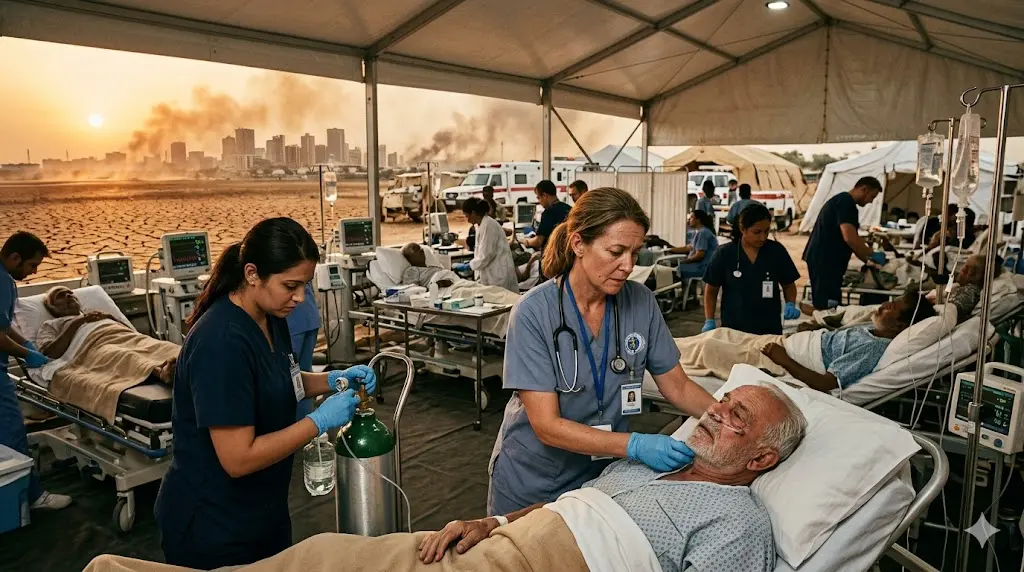
Climate change is no longer just an environmental issue. It’s now one of the biggest public health concerns affecting hospitals, healthcare workers, governments, and ordinary families across the globe. Rising temperatures, poor air quality, stronger storms, and changing disease patterns are already putting pressure on healthcare systems in ways many people didn’t expect a decade ago.
Climate change affects healthcare by increasing heat-related illnesses, respiratory diseases, mental health conditions, infectious outbreaks, and healthcare costs. In 2026, hospitals worldwide are struggling to manage climate-driven emergencies while also adapting infrastructure, staffing, and medical supply chains to a rapidly changing environment.
Why climate change is a growing concern in healthcare worldwide has become a serious discussion among medical experts, policymakers, and public health researchers. You can already see the effects in crowded emergency rooms during heatwaves, rising asthma cases linked to air pollution, and disease outbreaks spreading into regions that never dealt with them before.
Here’s the thing. Most people still think climate change mainly affects forests, oceans, or wildlife. But in reality, it’s affecting human health every single day. From elderly patients struggling during extreme heat to children exposed to worsening air pollution, healthcare systems are now on the front line of the climate crisis.
In my experience, what makes this issue especially worrying is how interconnected everything has become. A flood in one region can disrupt medical supply chains elsewhere. A wildfire can increase respiratory illness hundreds of miles away. Healthcare isn’t isolated anymore, and honestly, it probably never was.
What Is Climate Change and Why Does It Matter to Healthcare?
Climate Change: A long-term shift in global weather patterns caused largely by human activities such as burning fossil fuels, deforestation, and industrial emissions.
Climate change matters to healthcare because environmental conditions directly influence human health. Hotter temperatures increase dehydration and heart-related emergencies. Poor air quality worsens lung disease. Floods contaminate drinking water. Extreme weather damages hospitals and interrupts patient care.
According to global health researchers, climate-sensitive health risks are rising faster than many healthcare systems can adapt. Heatwaves alone are becoming deadlier every year, especially in densely populated urban areas.
What most people overlook is that healthcare itself depends heavily on stable infrastructure. Hospitals require electricity, clean water, transportation, medicine distribution, and digital systems. Climate-related disasters threaten all of those at once.
A recent report from the global health community explained how climate-linked diseases and environmental stress are expected to place heavier burdens on emergency care units over the next decade. Public health organizations have repeatedly warned that climate change could reverse years of healthcare progress in vulnerable regions.
Expert Tip
If you work in healthcare administration or public health planning, focus on prevention before crisis management. Preparing hospitals for heatwaves and flooding now is far cheaper than rebuilding emergency systems later.
Why Climate Change Matters in Healthcare in 2026
Healthcare systems in 2026 are dealing with challenges that were once considered future problems. They’re happening now.
Heat-related deaths are increasing across many countries. Hospitals are seeing more patients with dehydration, kidney stress, and cardiovascular complications during extreme weather periods. Children, outdoor workers, and older adults face the highest risk.
Respiratory illness is another major concern. Wildfire smoke and polluted air are contributing to asthma attacks, chronic lung disease, and respiratory infections. In some cities, emergency departments report spikes in breathing-related admissions after severe air-quality warnings.
Then there’s infectious disease spread. Mosquito-borne illnesses are expanding into new areas because warmer temperatures create more suitable breeding conditions. Diseases that were once limited to tropical zones are slowly appearing elsewhere.
Mental health is getting hit too, and honestly, this part doesn’t get enough attention. Climate disasters create long-term anxiety, trauma, stress, and displacement. Families who lose homes during floods or storms often deal with emotional consequences for years.
I remember reading about a coastal hospital that had to evacuate patients during repeated flooding events. The staff weren’t only treating injuries. They were dealing with panic, exhaustion, medication shortages, and overwhelmed emergency teams all at the same time. That example really shows how climate change affects healthcare beyond physical illness.
A Counterintuitive Reality
One surprising issue is that healthcare itself contributes significantly to carbon emissions. Hospitals operate around the clock, rely on energy-intensive equipment, and produce large amounts of waste. So healthcare organizations are now facing pressure to reduce emissions while simultaneously responding to climate-related illnesses.
That’s a tough balance, honestly.
How Climate Change Impacts Healthcare Systems Step by Step
Healthcare organizations worldwide are now adapting through a structured response process. Here’s how most systems are trying to manage climate-related health risks.
1. Identifying Regional Climate Risks
Hospitals first assess local threats such as flooding, heatwaves, wildfire exposure, or water shortages. A coastal hospital faces different risks compared to one in a drought-prone region.
This sounds obvious, but many facilities didn’t have detailed climate risk assessments until recently.
2. Strengthening Hospital Infrastructure
Healthcare buildings must handle extreme weather conditions. That includes backup power systems, cooling systems, flood protection, and reinforced emergency departments.
Some hospitals are redesigning rooftops, improving ventilation, and installing renewable energy systems to reduce operational disruptions.
3. Expanding Emergency Preparedness
Emergency response teams now train for climate-driven events including heat emergencies, infectious outbreaks, and disaster evacuations.
Healthcare workers also need updated protocols because climate-related medical cases can escalate quickly.
4. Improving Public Health Monitoring
Governments and healthcare agencies are using climate and health data together to predict outbreaks and prepare resources earlier.
For example, rising temperatures may signal increased mosquito activity weeks before disease cases appear.
5. Educating Communities
Public awareness matters more than people realize. Communities that understand heat safety, clean water protection, and emergency preparedness often experience lower health risks during climate events.
6. Reducing Healthcare Emissions
Hospitals are investing in greener technologies, energy-efficient equipment, and sustainable supply chains. It’s partly environmental responsibility, but it’s also becoming an economic necessity because energy costs keep rising.
Expert Tip
Healthcare leaders should treat climate resilience like cybersecurity. Waiting until a disaster happens usually leads to far higher financial and operational damage.
How Air Pollution and Extreme Weather Affect Human Health
Air pollution remains one of the clearest connections between climate change and healthcare concerns. Rising temperatures can worsen smog formation, which increases respiratory stress.
You’ve probably noticed how breathing feels harder during severe pollution days. That discomfort isn’t just temporary irritation. Long-term exposure increases the risk of asthma, lung cancer, heart disease, and stroke.
Extreme weather creates another layer of healthcare pressure. Heatwaves increase hospital admissions rapidly, especially among elderly populations and people with chronic illness.
Flooding creates sanitation problems too. Contaminated water can spread gastrointestinal infections and other diseases. In poorer regions, damaged infrastructure may leave communities without safe drinking water for weeks.
One realistic example involves a city dealing with prolonged heat and electricity failures. Hospitals suddenly face overloaded emergency rooms while also struggling to keep critical care equipment functioning. Even modern healthcare systems can become fragile under repeated climate stress.
What Healthcare Professionals Are Saying About Climate Risks
Many doctors now view climate change as a direct medical issue rather than a political or environmental debate.
In my opinion, that shift in perspective changes everything. Once physicians begin treating climate-linked illnesses daily, the discussion becomes much harder to ignore.
Nurses and emergency staff often report increased patient volume during extreme weather events. Public health researchers are also warning about unequal impacts. Lower-income communities usually face greater exposure to polluted environments and weaker healthcare access.
That inequality is probably one of the most uncomfortable truths in this conversation.
Some healthcare experts argue that future medical training should include climate-health education as a standard requirement. Honestly, that idea makes sense. Tomorrow’s healthcare workers will likely encounter climate-related medical complications routinely.
Common Misconception About Climate Change and Healthcare
A lot of people assume climate change only matters during natural disasters. That’s not really accurate.
The bigger issue is the slow, constant strain placed on healthcare systems every single year. Small increases in asthma, heat exhaustion, infectious disease spread, mental health stress, and healthcare costs eventually create enormous pressure at scale.
It’s less about one catastrophic event and more about nonstop accumulation.
Expert Tips and What Actually Works
Here’s what I’ve noticed from healthcare case studies and public health discussions: systems that focus on prevention usually recover faster and spend less money long term.
Hospitals investing early in resilient infrastructure tend to avoid massive operational failures later. Communities with strong public health communication also respond better during emergencies.
What actually works includes:
Expanding local healthcare access
Modernizing emergency response systems
Investing in cleaner energy sources
Improving air-quality monitoring
Supporting vulnerable populations before disasters happen
One hot take, though: some organizations still treat climate planning as a branding exercise instead of a survival strategy. That approach probably won’t hold up much longer as healthcare costs continue rising globally.
Expert Tip
If you manage healthcare facilities, prioritize backup energy systems and supply-chain flexibility first. Those two areas often fail fastest during climate emergencies.
People Most Asked About Climate Change and Healthcare
How does climate change affect public health?
Climate change increases heat-related illness, respiratory disease, infectious outbreaks, mental health stress, and injury rates from extreme weather events. Public health systems must also manage higher healthcare demand and emergency response challenges.
Why are hospitals worried about climate change?
Hospitals depend on stable infrastructure including electricity, clean water, transportation, and medical supply chains. Climate disasters can interrupt all of these simultaneously while increasing patient admissions.
Does climate change increase disease outbreaks?
Yes. Warmer temperatures and changing weather patterns can expand the habitats of mosquitoes and other disease carriers. That increases the spread of certain infectious diseases into new regions.
How does air pollution connect to climate change?
Burning fossil fuels contributes to both climate change and poor air quality. Polluted air increases respiratory illness, heart disease, and other chronic health conditions.
Which populations face the highest climate health risks?
Older adults, children, outdoor workers, lower-income communities, and people with chronic illnesses often face greater health risks during extreme heat, pollution, and climate disasters.
Can healthcare systems reduce climate impact?
Yes. Hospitals can improve energy efficiency, reduce waste, use renewable energy, and create sustainable medical supply systems while still delivering quality patient care.
Will climate change increase healthcare costs?
Most experts believe it already is. Rising emergency admissions, infrastructure damage, disease management, and disaster response costs are placing financial pressure on healthcare systems worldwide.
Final Thoughts
Why climate change is a growing concern in healthcare worldwide comes down to one reality: human health and environmental stability are deeply connected. Hospitals, healthcare workers, and governments are now dealing with climate-related medical challenges that affect millions of people every year.
What worries many experts isn’t just the severity of individual disasters. It’s the constant buildup of health pressures happening quietly across communities worldwide. Heat stress, polluted air, mental health strain, and disease spread are gradually reshaping how healthcare systems operate in 2026.
And honestly, healthcare probably won’t have the luxury of treating climate change as a distant issue anymore.
Our network platforms help businesses, agencies, and startups strengthen brand visibility through professional guest posting, media coverage, and high authority backlinks across trusted digital channels. Companies looking for better SEO ranking and organic traffic can benefit from services offered by Press Release Power and Rank Locally UK, combining instant publishing with targeted digital marketing strategies designed for long-term online growth.