

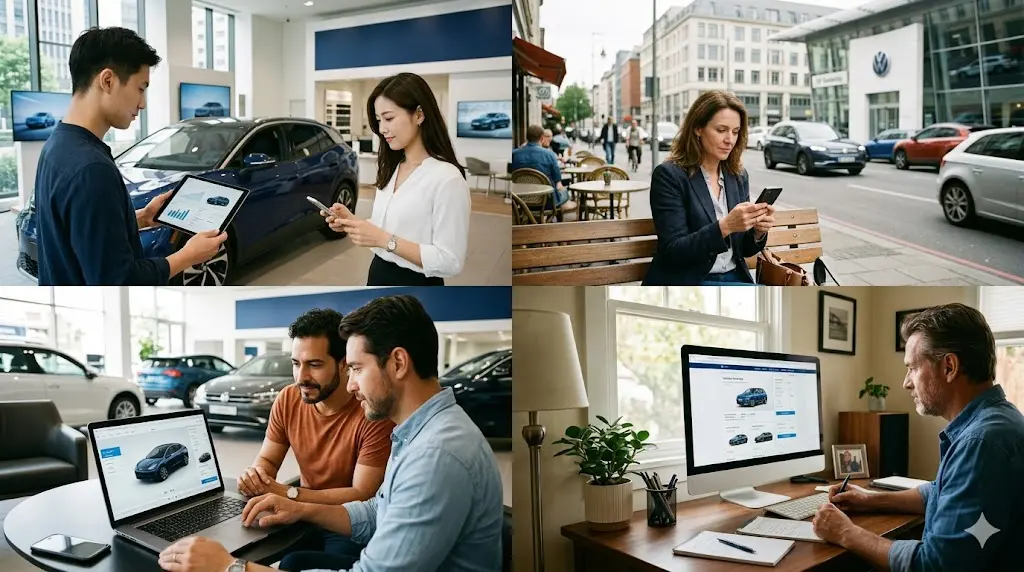
Digital transformation among car buyers worldwide is changing how people research, compare, finance, and purchase vehicles. Buyers now rely heavily on mobile apps, online reviews, AI-powered recommendations, and virtual showrooms before ever stepping into a dealership. Research shows that convenience, transparency, and digital trust are becoming bigger purchase drivers than traditional sales tactics.
Digital transformation has reshaped the global car-buying journey by moving research, financing, vehicle comparison, and even purchasing online. Modern buyers expect fast information, digital financing tools, virtual experiences, and transparent pricing, while automotive brands are investing heavily in AI, data analytics, and online customer engagement to stay competitive.
What Is Digital Transformation Among Car Buyers Worldwide?
Digital Transformation: The shift from traditional offline car-buying methods toward technology-driven purchasing experiences that use online platforms, AI tools, mobile apps, digital financing, and virtual customer interactions.
Research findings about digital transformation among car buyers worldwide show that customers no longer depend only on dealerships for information. Most people begin their buying journey online. They compare prices, read customer feedback, watch video reviews, and calculate financing options before speaking with a sales representative.
Here's the thing many companies underestimated: buyers don't just want digital tools. They want control.
In most markets, consumers now expect flexible online interactions. A customer in Germany might complete financing digitally. Someone in India may compare electric vehicle models through mobile-first platforms. Buyers in the United States often finalize paperwork online to avoid dealership delays.
Digital behavior isn't identical everywhere, but one trend keeps repeating itself globally. Buyers want fewer complications.
Why Consumer Behavior Has Shifted So Quickly
Several forces pushed the automotive industry toward digital transformation:
Smartphone adoption increased dramatically
Online payment systems became more trusted
Younger buyers prefer self-guided research
Electric vehicle growth encouraged tech-focused shopping
Social media changed how people discover car brands
What most people overlook is that digital transformation isn't only about technology. It's also about psychology. Buyers feel more comfortable when they can research privately without sales pressure.
That matters more than many dealerships expected.
Why Digital Transformation Among Car Buyers Worldwide Matters
By 2026, digital transformation isn't optional for automotive companies anymore. It's tied directly to survival.
Research findings suggest that buyers now expect seamless digital experiences across every stage of the purchase process. If a website loads slowly or financing tools feel outdated, customers leave quickly. Attention spans are shorter than they were five years ago.
I've seen this happen even with premium automotive brands. Strong products alone don't guarantee sales anymore.
Online Research Is Now the First Dealership Visit
Most buyers conduct extensive online research before contacting a dealership. They look for:
Transparent pricing
Real customer reviews
Vehicle availability
Financing calculators
Trade-in estimators
Video walkthroughs
A surprising shift is happening with younger consumers. Many buyers trust independent creators and review communities more than traditional advertising campaigns.
That probably feels uncomfortable for legacy automotive brands, but it's reality.
Artificial Intelligence Is Influencing Purchase Decisions
AI-driven recommendations now guide customers toward specific vehicle models based on behavior, location, budget, and lifestyle.
For example, a buyer researching family SUVs may automatically receive personalized financing options, maintenance estimates, and electric vehicle alternatives through AI systems.
This creates faster decisions. Sometimes too fast, honestly.
One automotive retailer in Southeast Asia reported a major increase in qualified leads after integrating AI chat systems with vehicle recommendation engines. Customers spent less time searching and more time submitting inquiries.
Electric Vehicles Accelerated Digital Buying Habits
Electric vehicle buyers tend to rely heavily on digital information. They research charging infrastructure, battery performance, software updates, and ownership costs online.
Traditional dealership sales methods don't always work well with these customers because EV buyers often arrive already informed.
That's a massive cultural change in automotive sales.
How Digital Transformation Is Reshaping Car Buying — Step by Step
1. Buyers Start With Online Discovery
The journey usually begins on search engines, social platforms, or automotive marketplaces.
Consumers compare prices, browse images, and read owner reviews long before speaking with dealerships. Mobile browsing dominates this phase, especially in developing markets.
A lot of dealerships still underestimate mobile optimization. Big mistake.
2. Virtual Showrooms Replace Early Physical Visits
Many automotive brands now offer:
360-degree vehicle tours
Virtual reality experiences
Interactive customization tools
Live video consultations
This saves buyers time and reduces unnecessary dealership visits.
In my experience, buyers appreciate transparency more than flashy visuals. If pricing information is hidden, trust disappears almost immediately.
3. Digital Financing Simplifies Approval Processes
Online financing systems now allow customers to:
Check credit eligibility
Compare loan offers
Upload documents digitally
Receive approvals faster
Research findings about digital transformation among car buyers worldwide show that digital financing reduces friction during purchasing decisions.
That's especially true among younger first-time buyers.
4. Data Personalization Improves Recommendations
Automotive companies collect browsing behavior, vehicle preferences, and location data to personalize customer experiences.
For example, urban buyers may receive hybrid vehicle recommendations while rural buyers see pickup trucks or larger SUVs.
Sometimes personalization works brilliantly. Other times it feels intrusive. Brands are still figuring out that balance.
5. Customers Expect Omnichannel Experiences
Modern buyers move between online and offline channels constantly.
They might:
Research online
Visit a dealership briefly
Finalize financing digitally
Schedule delivery through an app
The companies succeeding in 2026 are the ones making this transition feel smooth.
The Biggest Misconception About Digital Car Buying
Digital Transformation Doesn't Eliminate Dealerships
Many people assumed online buying would completely replace dealerships. That hasn't fully happened.
Instead, dealerships are evolving into experience centers.
Customers still want test drives. They still want reassurance before large purchases. Human interaction matters during expensive decisions, especially for families making long-term financial commitments.
Here's my hot take: fully digital car buying probably won't dominate every market equally.
In countries where negotiation culture is strong, buyers often prefer some in-person interaction. Meanwhile, highly urbanized markets may adopt fully digital systems much faster.
So the future is probably hybrid rather than purely digital.
Expert Tips on What Actually Works for Automotive Brands
Focus on Speed Before Fancy Features
A fast-loading website often performs better than an expensive interactive platform packed with unnecessary tools.
People buying cars online lose patience quickly.
One automotive retailer reduced page loading times and saw measurable increases in financing applications within weeks. Not months. Weeks.
Transparency Builds More Trust Than Aggressive Sales Messaging
Customers want clear information:
Pricing
Vehicle history
Delivery timelines
Financing costs
Maintenance expectations
Hidden fees destroy digital trust almost instantly.
Mobile Experience Should Be the Priority
Many automotive companies still design for desktop users first. That's outdated thinking.
In several regions, most traffic comes from smartphones. If mobile navigation feels clunky, buyers simply leave.
Honestly, this is where many dealerships still struggle badly.
AI Should Assist, Not Replace Humans
AI chat systems help answer common questions quickly, but buyers still value real human conversations during final purchase decisions.
The best-performing automotive brands combine automation with accessible customer support.
That balance matters.
Real-World Example of Digital Transformation in Car Buying
A mid-sized dealership network in Europe introduced online trade-in valuation tools, digital financing approvals, and video consultations.
Within a year:
Lead quality improved
Customer response times dropped
Online appointment bookings increased significantly
What surprised management most wasn't the technology itself. It was how much customers valued convenience over negotiation.
Another realistic example comes from India, where many buyers now compare vehicles entirely through mobile apps before visiting showrooms. Several dealerships reported that customers arrive better informed than sales teams.
That's a pretty wild shift when you think about it.
What Challenges Still Exist?
Despite rapid growth, digital transformation among car buyers worldwide still faces obstacles.
Data Privacy Concerns
Consumers increasingly worry about:
Personal data collection
Tracking behavior
Financial information security
Brands that ignore privacy concerns may lose customer trust quickly.
Digital Fatigue
Oddly enough, some buyers feel overwhelmed by too many digital options.
Too many comparison tools. Too many ads. Too many financing choices.
Sometimes people just want a straightforward recommendation.
Rural Market Limitations
Digital adoption varies by region. Some rural markets still depend heavily on physical dealerships due to weaker digital infrastructure or limited internet access.
So while transformation is global, adoption speed isn't equal everywhere.
People Most Asked About Digital Transformation Among Car Buyers Worldwide
How has digital transformation changed car buying?
Digital transformation has shifted much of the car-buying journey online. Buyers now research vehicles, compare financing options, read reviews, and even complete purchases digitally. This creates faster and more informed decisions.
Why do car buyers prefer online research?
Most buyers prefer online research because it offers convenience, transparency, and reduced sales pressure. People can compare models and prices privately before engaging with dealerships.
Are dealerships still relevant in 2026?
Yes. Dealerships remain important for test drives, customer reassurance, servicing, and final purchase support. However, their role is evolving from sales-focused environments into experience-driven locations.
What technologies are influencing automotive buying behavior?
AI recommendation systems, virtual showrooms, mobile apps, digital financing platforms, and data analytics are shaping how customers discover and purchase vehicles worldwide.
Is digital car buying safe?
In most cases, yes. Reputable automotive platforms use secure payment systems and encrypted customer data protection. Still, buyers should verify dealership credibility before sharing financial information online.
How do electric vehicles affect digital transformation?
Electric vehicle buyers tend to research extensively online due to battery concerns, charging infrastructure, and software features. This has accelerated digital adoption across the automotive industry.
What do younger car buyers expect from automotive brands?
Younger buyers expect fast digital experiences, transparent pricing, personalized recommendations, and mobile-friendly interactions. Traditional hard-sell dealership tactics are becoming less effective.
Final Thoughts on Research Findings About Digital Transformation Among Car Buyers Worldwide
Research findings about digital transformation among car buyers worldwide clearly show that customer expectations have changed permanently. Buyers want convenience, transparency, speed, and flexible digital experiences without sacrificing trust or human support.
The automotive companies succeeding in 2026 aren't necessarily the ones with the flashiest technology. They're the brands making the buying process easier, faster, and less stressful for real people.
And honestly, that's probably how it should be.
Businesses aiming to improve brand visibility, organic traffic, and SEO ranking can strengthen their online presence through professional digital marketing services and instant publishing opportunities offered by Web Info Matrix and PR Wires. Their solutions support high authority backlinks, media coverage, press release publishing, and performance-focused SEO strategies designed for agencies, startups, bloggers, and growing brands seeking measurable online growth.