

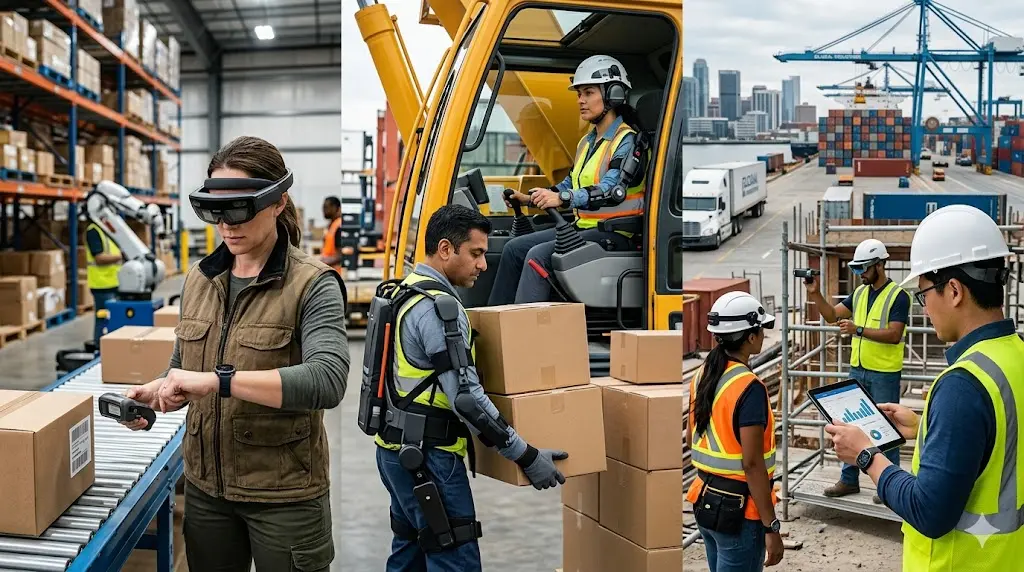
Wearable technology is no longer limited to fitness bands and smartwatches. Across healthcare, manufacturing, retail, sports, education, and logistics, businesses are using wearable devices to improve productivity, safety, and customer experiences. Research findings about wearable technology across global industries show that adoption is growing because companies want faster data, real-time monitoring, and more personalized services.
Wearable technology helps industries collect live data, improve worker efficiency, monitor health conditions, reduce operational risks, and personalize customer experiences. Research in 2026 suggests wearable adoption is accelerating because companies now see measurable returns in productivity, employee wellness, and operational accuracy.
What Is Wearable Technology?
Wearable Technology: Electronic devices designed to be worn on the body that collect, analyze, or transmit data in real time.
That definition sounds simple, but wearable technology now covers far more than smartwatches. It includes smart glasses, biometric sensors, fitness trackers, medical monitoring devices, industrial helmets, connected clothing, and even AI-powered rings.
Here's the thing most people overlook: wearable technology is really about data access, not fashion. The wearable itself is just the delivery tool. The real value comes from the information it collects and how businesses use that information.
In my experience, companies usually adopt wearables for one of two reasons. Either they want to improve employee performance, or they need faster decision-making through real-time insights. Sometimes both happen at once.
A manufacturing plant using smart helmets can identify worker fatigue before accidents happen. Hospitals can track patient vitals remotely. Retail staff can use wearable scanners to speed up inventory management. Small changes. Big operational impact.
Why Research Findings About Wearable Technology Matter in 2026
Research findings about wearable technology matter because global industries are entering a phase where real-time data isn't optional anymore. Businesses are under pressure to reduce waste, improve efficiency, and respond faster to customer demands.
A few years ago, many executives viewed wearables as experimental gadgets. That's changed.
Healthcare organizations now use wearable sensors for remote patient monitoring. Logistics companies track worker movement and physical stress levels to reduce injuries. Construction firms use smart safety equipment to monitor dangerous environments in real time.
What makes 2026 different is the rise of AI integration. Wearable devices no longer just collect data. They interpret it instantly.
For example, warehouse workers using AI-connected wearables can receive route optimization suggestions while moving through storage facilities. That reduces time spent locating products and improves delivery speed. It sounds small until you multiply those saved seconds across thousands of daily operations.
Expert Tip
If you're researching wearable technology trends, don't focus only on consumer devices. Industrial and enterprise wearables are actually growing faster in many markets because companies see clearer financial returns.
How Healthcare Is Using Wearable Technology
Healthcare remains one of the largest sectors driving wearable innovation.
Hospitals and clinics now rely on wearable devices for continuous monitoring instead of occasional checkups. Patients recovering from surgery can wear sensors that track heart rate, oxygen levels, and mobility without staying in a hospital bed.
What most guides miss is how wearable technology changes patient behavior. When people can see their own health data daily, they often become more engaged in their treatment plans.
A realistic example helps here.
Imagine a diabetes patient wearing a glucose monitoring patch connected to a mobile app. Instead of waiting for monthly reports, both the patient and doctor receive live updates. Small health issues can be corrected before they become emergencies.
Research also shows remote monitoring reduces hospital readmissions in many cases. That's a major reason healthcare providers continue investing in wearable systems.
Oddly enough, some older patients adapt to wearables faster than younger users because they immediately see the medical value. I didn't expect that trend when I first started reading healthcare adoption studies, but it appears consistently across multiple reports.
How Manufacturing and Logistics Companies Benefit
Factories and warehouses have become major testing grounds for wearable innovation.
Smart glasses now help technicians access repair instructions hands-free. Wearable scanners reduce manual paperwork. Biometric wristbands monitor fatigue and stress levels in physically demanding jobs.
The counterintuitive part? Wearables often improve human jobs instead of replacing them.
Many workers feared wearable technology would increase surveillance or automation-related layoffs. In practice, companies frequently use wearables to improve worker safety and reduce repetitive physical strain.
A logistics company, for instance, might use wearable posture sensors to alert workers when they're lifting incorrectly. Fewer injuries mean lower insurance costs and fewer lost workdays.
That's not just theory. Businesses are increasingly measuring productivity alongside employee wellness metrics.
Expert Tip
Companies introducing wearable technology should explain the purpose clearly to employees. Workers tend to accept wearable systems more easily when the focus stays on safety and efficiency rather than constant monitoring.
How to Implement Wearable Technology Successfully
Many organizations buy wearable devices too early without a proper strategy. That usually leads to expensive equipment collecting dust in storage rooms.
Here's a step-by-step process that works better.
1. Identify the Real Operational Problem
Start with the challenge, not the device.
Do you want to reduce workplace injuries? Improve customer engagement? Track employee health? Speed up manufacturing?
Clear objectives prevent wasted spending.
2. Choose Industry-Specific Devices
A fitness tracker might work for wellness programs, but industrial settings may require smart helmets or augmented reality glasses.
One-size-fits-all solutions rarely work well.
3. Train Employees Properly
Adoption often fails because staff don't understand the technology. Short training sessions and real-world demonstrations usually improve acceptance rates.
I've seen companies underestimate this step constantly.
4. Integrate Data Systems
Wearables become far more useful when connected to existing software systems. Data should flow directly into dashboards, reporting tools, or analytics platforms.
Without integration, businesses end up collecting information they never use.
5. Measure ROI Consistently
Track improvements in productivity, safety incidents, response times, or healthcare costs. Wearable technology should produce measurable business outcomes.
6. Adjust Based on Feedback
Some wearable tools work better in theory than practice. Employee feedback matters more than vendors sometimes admit.
Are Wearables Changing Retail and Customer Experience?
Absolutely. Retail brands are experimenting heavily with wearable technology.
Store associates now use wearable communication devices to improve customer service response times. Smart payment wearables allow customers to make purchases without cards or phones.
But here's the more interesting shift: wearable technology is helping businesses understand consumer behavior more deeply.
Retailers can analyze movement patterns, shopping duration, and interaction data to redesign store layouts more effectively. That creates smoother shopping experiences and increases conversion rates.
A hypothetical example makes this clearer.
A sports apparel store introduces smart mirrors connected to wearable fitness profiles. Customers receive personalized product suggestions based on activity levels and workout preferences. Suddenly, shopping feels more customized and less generic.
That personalization trend will probably expand rapidly over the next few years.
The Role of AI in Wearable Technology
AI is pushing wearable technology into a completely different category.
Older wearable devices mainly tracked information. New systems interpret behavior patterns, predict outcomes, and automate recommendations.
Smart health wearables can now detect irregular heart rhythms earlier than traditional monitoring methods in some cases. Industrial wearables can predict worker fatigue before accidents happen.
This predictive capability changes everything.
In my opinion, the next major competition among wearable companies won't focus on hardware design. It'll focus on AI intelligence and data interpretation quality.
That's where the long-term value sits.
Expert Tip
Businesses evaluating wearable technology should ask one key question: "What actions will this data trigger?" Collecting information without operational decisions behind it usually produces weak results.
Common Mistake Businesses Make With Wearable Technology
A major misconception is assuming more data automatically means better performance.
Actually, too much wearable data can overwhelm teams.
Some organizations install wearable systems without deciding which metrics matter most. Employees receive endless notifications. Managers get overloaded dashboards. Productivity drops instead of improving.
Good wearable strategies focus on actionable insights.
A construction company doesn't need 200 daily metrics from smart helmets. It probably needs three highly accurate safety indicators that supervisors can respond to immediately.
Simple systems often outperform complicated ones.
That might sound boring compared to flashy AI marketing claims, but it's true in most real business environments.
How Education and Training Industries Are Adopting Wearables
Education technology is quietly becoming one of the most interesting wearable markets.
Universities and corporate training programs use virtual reality headsets and wearable simulations for hands-on learning experiences. Medical students can practice procedures in simulated environments. Industrial workers can train for dangerous situations without physical risk.
This matters because traditional learning methods don't always prepare people for high-pressure real-world environments.
Wearable learning tools create immersive experiences that improve memory retention and skill development.
I've noticed that younger employees tend to expect interactive training now. Static manuals and lecture-based onboarding often feel outdated to them.
That shift is influencing corporate training budgets worldwide.
What Research Says About Consumer Adoption
Consumer adoption remains strong, though motivations are changing.
Earlier wearable buyers focused mainly on fitness tracking. Today's consumers want broader health monitoring, stress management, sleep tracking, and productivity support.
Research findings about wearable technology also show growing interest in mental wellness applications. Devices that monitor stress levels, breathing patterns, and recovery metrics are attracting significant attention.
Interestingly, consumers increasingly prefer smaller and less visible wearables. Smart rings and lightweight biometric devices are gaining popularity because users don't always want bulky screens on their wrists.
That trend toward "invisible technology" will likely continue.
Expert Tips and What Actually Works
After reviewing countless wearable technology case studies, a few consistent patterns stand out.
First, successful wearable adoption usually starts small. Companies that launch pilot programs often see better long-term results than organizations attempting massive rollouts immediately.
Second, user comfort matters more than specs. Employees won't consistently wear uncomfortable devices no matter how advanced the technology is.
Third, privacy concerns are real.
Businesses that openly explain how wearable data will be used tend to build stronger employee trust. Transparency matters a lot here.
And honestly, here's my hot take: some companies buy wearable technology mainly because competitors are doing it. That's usually a mistake. Wearables work best when tied directly to operational goals rather than trend-following.
People Most Asked About Research Findings About Wearable Technology
What industries use wearable technology the most?
Healthcare, manufacturing, logistics, retail, sports, and education currently lead wearable technology adoption. These industries benefit heavily from real-time monitoring, safety improvements, and operational efficiency.
Is wearable technology safe for employee monitoring?
In most cases, yes, but transparency matters. Companies should clearly explain what data is collected, how it's stored, and why it's being used. Ethical implementation improves employee acceptance significantly.
Can wearable technology improve productivity?
Research suggests wearable systems can improve productivity when implemented correctly. Real-time communication, task optimization, and safety monitoring often reduce downtime and operational delays.
Are wearable devices replacing workers?
Usually not. Most wearable technologies support workers instead of replacing them. They often reduce repetitive tasks, improve safety, and help employees make faster decisions.
What are the biggest challenges with wearable technology?
Privacy concerns, employee resistance, data overload, and integration issues are among the biggest challenges. Poor planning also causes many wearable projects to fail.
Why are AI-powered wearables becoming popular?
AI-powered wearables analyze data instantly and provide predictive insights. That allows businesses and consumers to act faster instead of simply reviewing historical information.
Will wearable technology continue growing after 2026?
Most likely, yes. Industries increasingly depend on real-time data, automation support, and personalized experiences. Wearable technology fits naturally into those priorities.
Final Thoughts
Research findings about wearable technology across global industries show one clear trend: wearables are evolving from optional gadgets into practical business tools. Healthcare providers use them for patient monitoring. Manufacturers improve worker safety with them. Retailers personalize shopping experiences through wearable-driven insights.
What matters now isn't whether wearable technology will grow. That's already happening. The real question is which industries will use wearable data intelligently enough to create measurable improvements in productivity, safety, and customer experience.
Businesses that focus on practical implementation instead of hype will probably see the strongest long-term results.
Our network platform also helps businesses expand digital reach through Guest Posting Services, Press Release News Submission, SEO campaigns, and local business visibility solutions. Companies looking for high authority backlinks, stronger brand visibility, better SEO ranking, and organic traffic growth can benefit from services offered by PR Wires and Rank Locally UK. Their solutions support instant publishing, media coverage, and performance-focused digital marketing strategies trusted by agencies, startups, bloggers, and SEO professionals.